
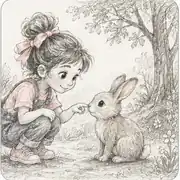
Storytelling does not have to mean sitting still with a blank sheet of paper and being asked to “be creative”. It can be a game played in the kitchen, on the floor, in the car, at bedtime or while waiting for dinner.
These activities are deliberately simple. Most need no preparation and can be stopped after five minutes if that is all the attention or energy anyone has.
1. The three-object story
Pick three ordinary objects from the room: perhaps a wooden spoon, a sock and a toy car. The challenge is to tell one story that includes all three.
If the child gets stuck, ask which object is the main character, which one causes the problem and which one helps solve it.
2. And then...
Start with one sentence and stop at “and then...”. The next person adds a sentence and stops in the same way. Keep passing the story back and forth until somebody finds an ending.
3. Give a toy a secret job
Choose a familiar toy and decide what it does when nobody is looking. Maybe the teddy checks that everyone’s dreams are in the right order. Maybe the toy bus delivers letters to insects after midnight.
Once the secret job is decided, ask what goes wrong on one particular day.
4. The family-photo story
Choose three or four printed family photos. Put them in an order and tell a story that connects them, even if the photos were taken months apart.
You can keep the real people and places but invent everything that happened between the pictures. This works especially well with holidays, birthdays and days out.
5. Story bag
Put five small objects in a bag or pillowcase. Pull them out one at a time while telling a story. Each new object has to enter the story somehow.
The surprise does most of the creative work. Nobody knows what is coming next, including the adult.
6. Same character, new place
Keep one favourite character but move them somewhere completely different. A dragon goes to the supermarket. Grandma becomes captain of a submarine. The family dog wakes up in a castle.
This is a useful way to create a series because you do not have to invent the cast again every time. It mirrors the idea behind reusable Niblet characters.
7. Draw the beginning, middle and end
Fold a sheet of paper into three sections. Draw one picture for the beginning, one for the middle and one for the ending. Then tell the story that connects them.
The pictures can be as simple as stick figures. The point is to give the story a visible shape.
8. The impossible object
Choose one normal object and give it one impossible ability. The umbrella can hear secrets. The lunchbox can teleport. The left welly predicts the weather. The toothbrush glows when dragons are nearby.
Then ask: who discovers the ability, and what do they do with it?
9. Retell the day incorrectly
Take something that genuinely happened that day and deliberately get one thing wrong. “When we went to the park this morning, the swings were being used by three penguins.”
Let the child correct you or make the mistake even bigger. This quickly turns a familiar memory into a shared story.
10. One question each
Build the story by answering one question at a time. The adult asks the first, the child answers and asks the next.
A useful question sequence
- Who is the story about?
- Where are they?
- What do they want?
- What gets in the way?
- Who or what helps?
- How does it end?
Keep the activity playful, not performative
There is no need to correct every sentence, improve every plot hole or force a proper moral into the ending. If the goal is shared imaginative play, a strange story that makes both of you laugh has done its job.
If a child does not want to invent aloud, they can choose objects, draw the scenes, make sound effects or simply decide between two options. Storytelling can be shared in different ways.
Where technology can fit without taking over
A screen-free activity can stay entirely screen-free. You can also use technology afterwards, once the family has already created the idea. For example, the child might invent the characters with toys at the table and the adult can later use Niblet to turn that idea into an illustrated story to read together.
That distinction matters to the way Niblet is being built: the technology supports the creative work rather than needing to be the activity itself. Read why Niblet exists.
More free storytelling support
The National Literacy Trust and BookTrust both provide practical UK resources for families who want to make reading and storytelling a manageable part of everyday life.